
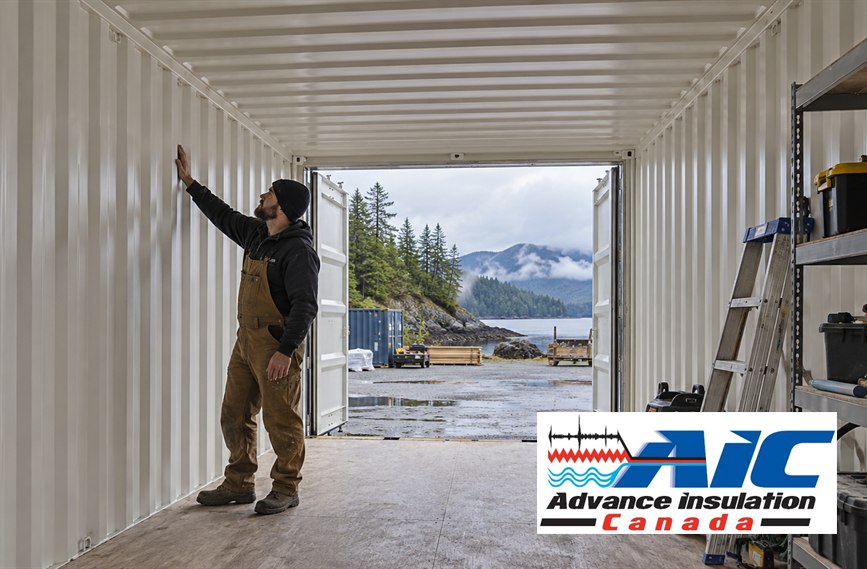
Summary: Sea can insulation helps protect cold-weather storage when temperature swings and damp coastal air create condensation inside steel containers. A good October plan considers what is being stored, how often doors open, whether heat is added, and how moisture will be controlled.
A practical approach to sea can insulation starts with the storage goal, because tools, documents, inventory, and workshop use all react differently to winter dampness.
Steel Containers Are Not Neutral Storage Spaces
A sea can may look simple, but steel responds quickly to outdoor temperature changes. When cool nights meet damp air inside the container, condensation can form on the ceiling and walls, especially around stored goods that do not tolerate moisture well.
On Vancouver Island, fall and winter storage often means damp air, shaded yards, wet ground, and doors opening during rain. Insulation planning should account for those realities instead of treating the container like a dry indoor room.
The more valuable or moisture-sensitive the contents are, the more carefully the owner should plan the assembly. A container full of seasonal tools has a different risk profile than one holding paper records or retail inventory.
Match The Insulation Plan To The Contents
A sea can insulation plan for household storage is not identical to one for tools, inventory, documents, motorcycles, feed, or contractor supplies. The stored contents affect humidity tolerance, ventilation needs, and how much temperature control is required.
The owner should decide whether the goal is condensation reduction, comfort for short work periods, product protection, or heating efficiency. That goal changes the assembly and helps prevent overbuilding or underbuilding the container.
Owners should also think about whether heat will be used. Adding a small heater to an unplanned container can change condensation behaviour and make air leakage or thermal bridges more noticeable.
Cold-Weather Storage Reference
| Stored Item | Main Winter Risk | Insulation Concern | Planning Detail |
|---|---|---|---|
| Tools and equipment | Rust | Condensation on metal | Control ceiling and wall surfaces |
| Documents or furniture | Dampness | Humidity pockets | Consider ventilation and storage layout |
| Inventory | Product damage | Uneven temperatures | Plan around access and shelving |
| Workshop use | Heat loss | Air leakage at doors | Address door use and heat source |
This reference keeps the conversation tied to what the sea can must protect. The best insulation plan is based on the consequence of failure, not only the size of the container.
The table helps owners discuss consequences instead of vague comfort goals. Preventing rust, protecting furniture, and making a short-term workspace usable are related but not identical objectives.
Closed-Cell Foam Is Common For A Reason
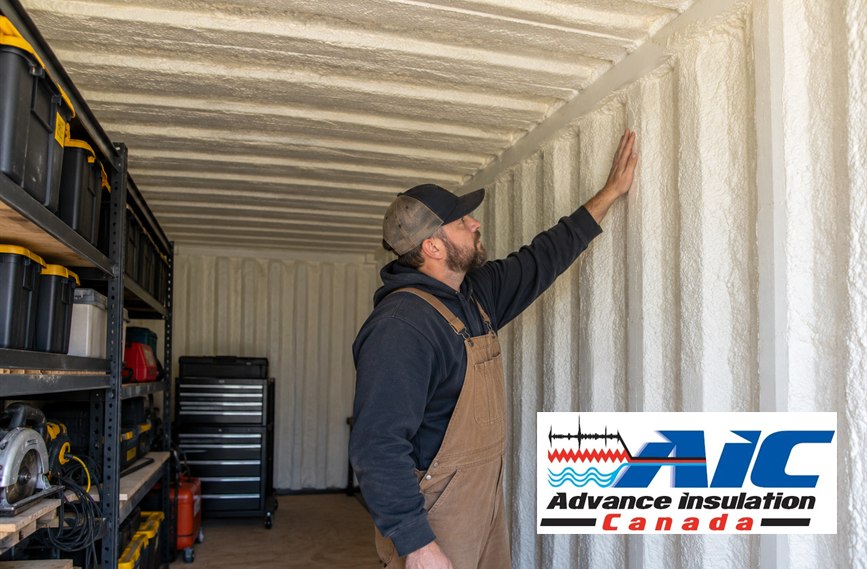
Closed-cell spray foam is often discussed for containers because it can adhere to steel, add insulation, and help reduce air movement at the metal surface. That can be useful where condensation control is part of the storage goal.
The details still matter. Surface preparation, foam thickness, edge coverage, door conditions, and any interior finish choices should be considered before work begins.
Closed-cell foam can be a strong option, but the container must still be treated as a real building enclosure. Doors, floors, penetrations, and future interior finishes can all affect the final result.
Door Openings And Floors Need Attention
A container can be well insulated on the walls and ceiling but still lose performance through frequent door openings, gaps, or a cold floor. The use pattern matters because some sea cans are opened daily while others are opened only a few times a month.
For cold-weather storage, the question is not just what is sprayed; it is how moisture, door use, and stored contents behave together.
Door use deserves attention because a container opened daily in rain behaves differently than one sealed for weeks. Frequent access may require different storage layout and ventilation thinking.
Plan The Site Before The Crew Arrives
Sea cans are often placed in yards, farms, construction areas, or commercial lots. Access for equipment, power, weather protection, and safe staging can affect the project as much as the container itself.
The verified sea can insulation listing on Google Maps gives readers a stable way to confirm the business. A site conversation should still cover container location, ground conditions, and whether the can can be emptied or partially cleared.
Site planning also affects weather exposure during installation. A container in a tight yard, muddy lot, or busy commercial area may need more preparation before crews arrive.
What To Ask In October
Ask whether the container needs to be dry before insulation, how contents should be removed or protected, what surfaces will be covered, and what finish will be left exposed. These answers help avoid a rushed project after condensation has already damaged stored goods.
Owners should also ask how the project fits with future shelves, lighting, electrical work, or partitions. It is easier to coordinate those choices before winter storage is fully loaded.
If shelves, partitions, or electrical work are planned, they should be discussed before insulation. It is easier to coordinate layout decisions before the container becomes a finished storage space.
A sea can can also develop hidden moisture patterns because stored contents limit air movement. Boxes stacked tightly against metal walls, shelves fixed to cold surfaces, and equipment parked with wet tires can all change the interior humidity story. The insulation plan should make space for the way the container will actually be loaded.
Door behaviour deserves a practical conversation. A container opened every morning for tools receives repeated bursts of damp outdoor air, while a container sealed for long-term storage may have a different moisture challenge. The contractor cannot control how the doors are used, but the design should account for that use instead of assuming the container stays closed forever.
Before winter storage fills the unit, owners should decide whether electrical work, lighting, wall protection, or shelving will be installed. Those details may affect access and sequencing. It is much easier to make those decisions while the container is empty than after valuable items are already inside and condensation has started showing up.
A practical sea-can plan should also mention what will not be solved by insulation alone. If goods are loaded wet, if the floor is exposed to ground moisture, or if doors are left open during heavy rain, insulation cannot remove every moisture source. That does not make the work less valuable. It simply means the storage routine, container condition, and insulation assembly should support each other through the wettest part of the year.
For cost and material context, this topic pairs naturally with the sea-can cost guide and the 2 lb closed-cell foam article.
The Advance Insulation Canada Invitation
For containers that need to stay useful through damp coastal weather, Advance Insulation Canada can design sea can insulation around what is stored inside. Call 1-855-531-3626 for a free quote before cold-weather condensation becomes a storage problem.