
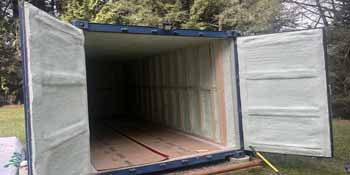
Shipping containers, or sea cans, as many Canadians call them, have become more than just cargo carriers. People are turning them into homes, offices, workshops, and even retail spaces. With this growing trend, one of the most common questions we hear is about sea can insulation cost in Canada. After all, no one wants to live or work in a steel box that freezes in winter and overheats in summer.
Insulation is the key to making a sea can livable and energy-efficient. The type of insulation you choose, the size of your container, and whether you hire professionals or attempt a do-it-yourself approach all affect the final price. In this blog, we will break down everything you need to know about the shipping container insulation price, compare materials, explain what impacts the sea can spray foam cost, and share real-world expectations for Canadian homeowners and businesses.
At Advance Insulation Canada, we have seen firsthand how the right insulation can completely transform a sea can. From small personal projects like backyard studios to large-scale commercial builds, proper insulation not only makes these structures comfortable but also ensures long-term durability and energy savings.
Whether you are planning to design a cozy home office, a temperature-controlled storage unit, or a functional commercial space, understanding the true sea can insulation cost in Canada will help you budget wisely and avoid unexpected expenses. With the right approach, your container can go from a simple steel box to a practical, cost-effective solution that fits your lifestyle or business needs.
Why Insulating a Sea Can Matter
Steel is one of the strongest building materials available, which is why sea cans can withstand long ocean voyages, rough handling, and harsh environments. However, this strength comes with one big weakness: steel conducts heat and cold very quickly. That means a container left without insulation will trap extreme temperatures. In summer, it feels like an oven. In winter, it is no better than an icebox.
Temperature swings are not the only concern. Moisture is another serious issue. When warm air meets the cold steel walls, condensation forms. Over time, this creates dampness, mold growth, and even rust that can compromise the structure of the container. For anyone planning to use a sea can as a home, office, or workshop, these conditions can make the space both uncomfortable and unhealthy.
Proper insulation changes everything. It acts as a protective barrier that regulates indoor temperature, prevents condensation, and reduces noise. Insulation also improves energy efficiency, which means lower heating and cooling costs in the long run. For homeowners, this translates to a more comfortable living space and increased property value. For businesses, insulation protects valuable goods, ensures safer working conditions, and helps cut down on utility bills.
Think of it this way: without insulation, a sea can is just a steel box with limited use. Once insulated, it becomes a versatile, functional, and livable structure that can serve as a home, office, storage facility, or creative space. The investment in insulation is not just about comfort today but also about protecting your container and extending its lifespan for years to come.
More: How to Qualify for Energy Rebates on Home Insulation
Factors That Influence Sea Can Insulation Cost in Canada
The sea can insulation cost in Canada varies depending on several factors. Here are the biggest ones to consider:
- Container Size
- A standard 20-foot container costs less to insulate than a 40-foot container simply because of square footage.
- Average Canadian prices can range from $1,500 to $5,000 depending on the size and material chosen.
- Type of Insulation Material
- Spray foam, batt insulation, rigid foam boards, and blown-in insulation all come with different price tags.
- For example, spray foam is more expensive upfront but offers the best thermal seal.
- Labor Costs
- Hiring professionals ensures proper installation and reduces mistakes, but it comes at a cost.
- Labor in Canada typically adds $1,000 to $3,000 depending on the complexity of the project.
Read our reviews: See customer experiences
- Climate and Location
- Insulation in British Columbia may require different R-values compared to containers in Alberta or Ontario.
- Colder regions often require thicker or dual-layer insulation, increasing costs.
- Purpose of the Container
- A sea can used for storage may only need basic insulation.
- A container home or office will require full thermal sealing, vapor barriers, and potentially interior finishes.
Types of Insulation for Sea Cans and Their Costs
Spray Foam Insulation
Spray foam is the most popular choice for sea cans because it bonds directly to steel and seals even the smallest gaps.
- Pros: Excellent air seal, high R-value per inch, prevents condensation.
- Cons: Higher upfront cost, requires professional installation.
- Average Sea Can Spray Foam Cost in Canada: $2,000 to $6,000 depending on container size and foam thickness.
Rigid Foam Board Insulation
Rigid foam boards are another effective option, especially for DIYers.
- Pros: Easy to install, relatively affordable, durable.
- Cons: Can leave gaps if not sealed properly, less effective against condensation compared to spray foam.
- Average Cost: $1,500 to $3,500 for materials and installation.
Batt Insulation
Traditional fiberglass or mineral wool batts can also be used, especially when framing is added inside the container.
- Pros: Affordable, widely available, simple installation.
- Cons: Prone to moisture issues if not sealed properly, lower thermal performance than foam.
- Average Cost: $1,200 to $3,000.
Blown-In Insulation
Blown-in cellulose or fiberglass is less common but can work in framed sections.
- Pros: Good for irregular spaces, eco-friendly options available.
- Cons: Requires special equipment, less effective without vapor barriers.
- Average Cost: $1,500 to $3,000.
Comparing Shipping Container Insulation Prices in Canada
When evaluating the shipping container insulation price, it helps to consider both short-term and long-term costs. Spray foam, for example, has a higher upfront investment but reduces energy bills significantly over time. Batt insulation may cost less initially but may not perform as well in harsh Canadian climates.
Here is a simplified comparison for a 20-foot container:
- Spray Foam: $2,500 to $3,500
- Rigid Foam Board: $2,000 to $3,000
- Batt Insulation: $1,500 to $2,500
For a 40-foot container, expect costs to increase by 40 to 60 percent.
More: When insulating a sea can you’ll want to compare spray foam vs other materials check out our Spray Foam vs Traditional Insulation for Quonset Buildings.
DIY vs Professional Installation: Which One Makes Sense?
You might wonder if you can cut costs by insulating your sea can yourself. The answer depends on your skills, tools, and project goals.
- DIY Pros: Saves money on labor, gives you control, works for small projects.
- DIY Cons: Easy to make mistakes, risk of moisture buildup, time-consuming.
Professional installers bring expertise, equipment, and knowledge of Canadian building codes. While you pay more upfront, you get peace of mind and often better energy performance. For projects like container homes or offices, professional installation is highly recommended.
For commercial-grade insulation considerations see Spray Foam Insulation is Key for Efficiency and Comfort.
Long-Term Value of Insulating Sea Cans
When weighing the sea can insulation cost in Canada, it is important to think about long-term savings. Proper insulation reduces heating and cooling bills, prevents costly moisture damage, and extends the lifespan of the container.
For businesses, insulation pays off in reduced operational costs and better protection for goods. For homeowners, it means comfort and higher resale value.
At Advance Insulation Canada, We Help You Make the Right Choice
Insulating a sea can is not just about cost. It is about comfort, efficiency, and durability. At Advance Insulation Canada, we understand the unique challenges of Canadian climates and offer tailored solutions that fit your needs and budget.
We provide expert consultation, material recommendations, and professional installation services across Victoria, BC and beyond. Our team ensures your container project is insulated the right way, giving you peace of mind and long-term value.
Call Advance Insulation Canada Today for a Free Sea Can Insulation Quote
Ready to turn your sea can into a comfortable, efficient space? Let us help you navigate the true sea can insulation cost in Canada with expert advice and trusted service.
Call us today at 855-531-3626 or request a free quote online. At Advance Insulation Canada, we proudly serve Victoria, BC and beyond. Protect your investment and make your container space work for you today!