
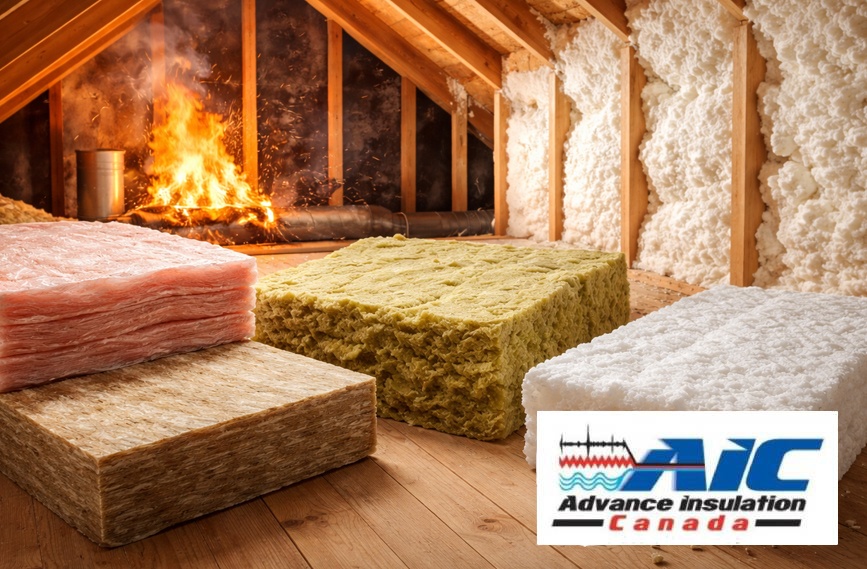
Summary: Insulation can be fire resistant, but very few materials are truly fireproof. Products like mineral wool and fiberglass offer strong resistance to heat and flames, while materials such as spray foam and rigid foam require protective barriers to meet safety standards. Choosing the right insulation and ensuring proper installation helps improve energy efficiency while supporting fire safety in the home.
Fire safety remains one of the most important considerations when building or upgrading a home. Many homeowners assume insulation automatically provides fire protection, yet the reality is more nuanced. Some insulation products resist flames extremely well, while others require additional fire barriers to meet building code standards.
Insulation plays a vital role in energy efficiency and indoor comfort. Still, its behavior during a fire depends on the material it’s made of. Learn more about how insulation evolved for how our homes are insulated. Understanding how different insulation types react to heat and flames can help homeowners make better decisions when planning renovations or improving attic and wall insulation.
Several common insulation materials offer excellent fire resistance, and others are designed to slow the spread of flames. The key lies in understanding how each type performs and how it should be installed to meet safety guidelines.
What Fireproof Insulation Really Means
The phrase “fireproof insulation” often appears in marketing and online discussions, yet very few materials are truly fireproof. Most insulation products are better described as fire-resistant or non-combustible.
Fire-resistant insulation is designed to resist ignition and slow the spread of flames. Some materials can withstand extremely high temperatures without burning. In contrast, others are treated with fire retardants to improve their performance during a fire.
Building codes typically classify insulation materials such as:
- Non-combustible
- Fire resistant
- Flame-retardant treated
Non-combustible materials do not burn when exposed to flames. Fire-resistant insulation slows the spread of fire but may still degrade under extreme heat. Flame-retardant insulation contains additives that reduce the likelihood of ignition.
Understanding these differences helps homeowners select insulation products that meet both energy-efficiency goals and fire-safety standards.
How Fire Resistance Is Measured in Insulation
Fire performance in insulation materials is measured through standardized tests. These tests evaluate how insulation reacts when exposed to heat, flames, or high temperatures.
One common rating is the flame spread index, which measures how quickly flames spread across a material’s surface. Lower scores indicate better resistance to fire spread.
Another measurement is the smoke developed index, which evaluates how much smoke a material produces during combustion. Excessive smoke can pose serious safety risks during a fire.
Some insulation materials are also tested for non-combustibility, meaning they do not ignite when exposed to high temperatures.
Building codes use these ratings to determine where specific insulation products can be installed within a home. Attics, walls, and crawl spaces may require different insulation types depending on fire safety requirements.
Mineral Wool and Rockwool Insulation
Mineral wool insulation, commonly known as rockwool or stone wool, is widely recognized for its exceptional fire resistance.
Manufacturers produce mineral wool by melting natural rock or slag and spinning the molten material into dense fibers. The resulting insulation can withstand extremely high temperatures without burning.
Many mineral wool products withstand temperatures above 1000°C, making them among the most fire-resistant insulation options available for residential and commercial buildings.
In addition to fire resistance, mineral wool offers several advantages:
- Strong thermal insulation
- Excellent soundproofing qualities
- Moisture resistance
- Durability over time
Because of these qualities, mineral wool insulation is often used in fire-rated walls, mechanical rooms, and areas requiring enhanced fire protection.
| Insulation Type | Fire Resistance Level | Typical Use in Homes |
|---|---|---|
| Mineral Wool (Rockwool) | Non-combustible and resistant to temperatures above 1000°C | Fire-rated walls, attics, soundproofing, and mechanical rooms |
| Fiberglass | Highly fire resistant but may contain combustible facing materials | Attics, wall cavities, and ceiling insulation |
| Spray Foam | Combustible and requires a thermal barrier such as drywall | Air sealing in attics, walls, and crawl spaces |
| Cellulose | Treated with fire retardants to slow ignition | Blown-in attic insulation and wall cavities |
Fiberglass Insulation and Fire Resistance
Fiberglass insulation is one of the most common insulation materials used in homes. It is produced by melting glass and spinning it into fine fibers that trap air and slow heat transfer. Consider reading the difference between Blown-In Insulation vs Batts: Which Is More Suitable for Canadian Homes.
Glass itself does not burn, which gives fiberglass insulation natural fire-resistant properties. The fibers can withstand high temperatures and do not ignite easily.
However, fiberglass insulation may contain small amounts of binders or facing materials such as paper or foil. These components can burn if exposed to flames.
Unfaced fiberglass insulation performs better in fire situations because it contains fewer combustible materials. For this reason, building codes often require protective barriers, such as drywall, to cover insulation in walls and ceilings.
When installed correctly, fiberglass insulation provides strong thermal performance along with reliable fire resistance.
Spray Foam Insulation and Fire Safety
Spray foam insulation has become increasingly popular due to its air sealing ability and high R-value. The material expands when applied, filling gaps and sealing air leaks throughout a home.
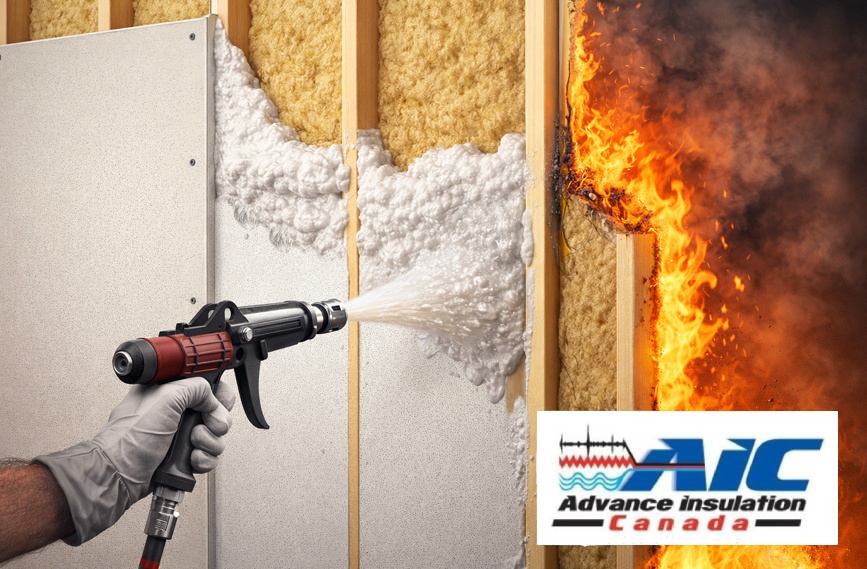
Spray foam insulation is made from polyurethane and is considered combustible under certain conditions which is why professional fireproofing systems and protective coatings are often used to improve fire resistance. As a result, building codes require spray foam to be protected by a thermal barrier, usually drywall or a specialized fire-resistant coating.
Manufacturers often add flame-retardant additives to spray foam insulation to slow ignition and reduce flame spread. These additives improve safety but do not make the material fully fireproof.
Proper installation plays a major role in fire safety with spray foam insulation. When installed behind approved protective barriers, spray foam insulation meets building code requirements and performs safely in residential structures.
Cellulose and Other Insulation Materials
Cellulose insulation is made from recycled paper products treated with fire-retardant chemicals. These treatments help the material resist ignition and slow the spread of flames.
Despite being made from paper fibers, cellulose insulation can perform surprisingly well in fire tests thanks to its fire-retardant treatment.
Several other insulation materials also offer unique fire resistance properties:
Ceramic fiber insulation
Used in industrial environments, ceramic fiber can tolerate extremely high temperatures and remains stable under intense heat.
Rigid foam insulation
Rigid foam products provide strong thermal performance but require fire barriers to comply with building codes.
Reflective insulation
Reflective barriers help reduce radiant heat transfer but may require protective coverings depending on the material composition.
Each insulation type offers different advantages depending on the application, climate, and safety requirements.
Choosing Insulation with Fire Safety in Mind
Fire resistance should always be considered alongside energy efficiency, moisture control, and overall durability.
Homeowners planning insulation upgrades can improve fire safety by focusing on a few key factors.
First, choose insulation materials with strong fire resistance ratings. Mineral wool and fiberglass insulation both perform well in many residential applications.
Second, ensure insulation is installed in accordance with building code requirements. Protective barriers such as drywall help prevent direct flame exposure.
Third, maintain proper attic ventilation and electrical safety. Overheated wiring or poorly installed fixtures can create fire hazards near insulation.
Finally, professional installation ensures insulation products perform as intended. Experienced installers understand the safety standards required for different insulation materials and building structures.
Proper insulation improves comfort and efficiency while contributing to a safer home environment.
The Advance Insulation Canada Invitation
Advance Insulation Canada provides professional insulation services designed to improve comfort, efficiency, and safety for homeowners across Canada. Our team installs high-quality insulation products that meet modern building standards and help protect homes from extreme temperatures and potential fire risks.
Two reasons homeowners trust Advance Insulation Canada:
- Expert installation backed by industry experience, ensuring insulation performs properly and meets safety requirements. Take a look at our reviews!
- Energy-efficient insulation solutions that reduce heat loss while improving overall home performance.
To learn more about insulation upgrades or schedule a consultation, call Advance Insulation Canada at (778) 229-4739 and speak with a member of our team today.