Summary: Proper attic insulation in Fort McMurray helps homeowners stay warm during harsh winters while lowering heating costs and improving overall energy efficiency. Upgrading insulation to recommended R-values can reduce heat loss, prevent ice dams, and create more consistent indoor temperatures. Professional attic insulation services ensure the right materials and installation methods are used to protect homes in Northern Alberta’s demanding climate.
Fort McMurray homeowners know that winters can be intense. Long stretches of deep cold place enormous pressure on heating systems and building envelopes. Strong attic insulation in Fort McMurray homes plays a major role in maintaining stable indoor temperatures, protecting the roof structure, and lowering heating costs throughout the season.
Attic insulation acts as the barrier between the warm air inside your home and the harsh northern climate outside. Heat naturally rises, and without adequate insulation in the attic, it escapes through the roof. A well-insulated attic slows that heat transfer and helps your furnace maintain comfortable temperatures with less effort.
Many homes in Northern Alberta still operate with insulation levels that fall below modern recommendations. Upgrading attic insulation is one of the most effective ways to improve energy efficiency, reduce drafts, and make a house feel warmer during the coldest months.
Why Attic Insulation Matters in Fort McMurray
Fort McMurray experiences some of the coldest winter temperatures in Canada. Long winters, heavy snow, and fluctuating temperatures place unique stress on roofing systems and attic spaces.
A properly insulated attic helps protect a home in several ways.
First, insulation reduces heat loss through the ceiling. Warm air that remains inside the living space keeps rooms comfortable and reduces the workload placed on the furnace.
Second, attic insulation helps maintain a consistent temperature across the roof surface. When heat escapes unevenly through the attic, snow on the roof melts and refreezes near the eaves. Ice dams can form along roof edges, potentially damaging shingles and allowing water to enter the home.
Third, insulation contributes to a healthier indoor environment. Balanced temperatures reduce condensation buildup in attics, helping prevent moisture problems and mold growth over time.
For homeowners in Fort McMurray, attic insulation serves as a first line of defense against the region’s demanding climate.
Recommended R-Value for Attic Insulation in Northern Alberta
R-value measures the ability of insulation to resist heat transfer. Higher numbers represent stronger thermal resistance and better protection against heat loss.
Homes in Fort McMurray typically benefit from attic insulation levels of R-50 to R-60. Older homes may have far less insulation, often only R-20 or R-30.
Increasing insulation levels to modern standards can make a noticeable difference in comfort. Rooms feel warmer, cold spots become less common, and heating systems run less frequently.
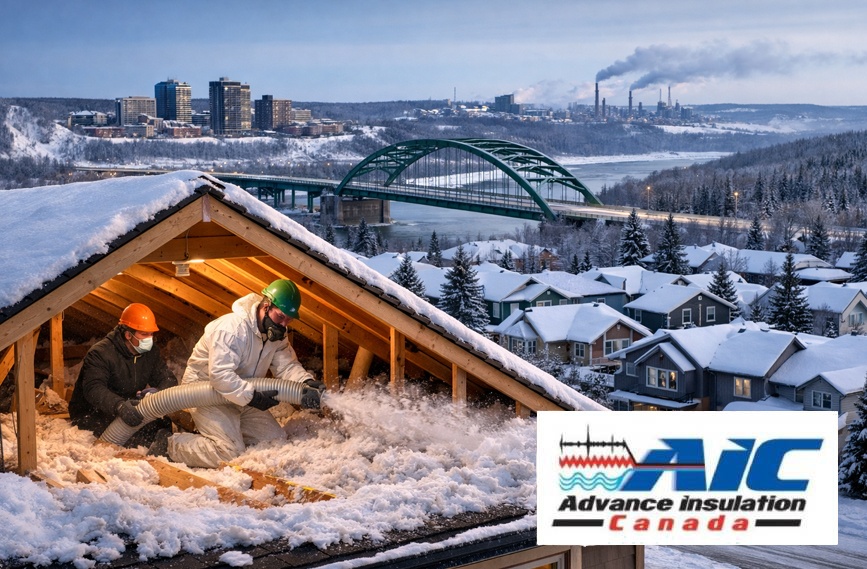
Blown-in insulation is commonly used to achieve these higher R-values. The material spreads evenly across the attic floor, filling gaps around joists and covering difficult corners that batt insulation may miss.
Professional installers measure existing insulation depth and calculate the amount required to reach the desired R-value for the home.
| Insulation Level | Approximate R-Value | What It Means for Your Home |
|---|---|---|
| Older Homes (Minimal Insulation) | R-20 to R-30 | High heat loss, colder rooms, and increased heating costs during winter. |
| Moderate Insulation | R-40 | Improved comfort, but still below modern efficiency standards for Northern Alberta. |
| Recommended Level | R-50 to R-60 | Strong protection against heat loss and better temperature stability in winter. |
| High Performance | R-60+ | Maximum energy efficiency and optimal performance for extreme cold climates. |
Signs Your Attic Insulation Needs an Upgrade
Many homeowners do not realize their attic insulation needs improvement until problems appear.
Several common signs suggest the attic may benefit from additional insulation.
High winter heating bills often indicate that warm air is escaping through the attic. A furnace working overtime to maintain temperature can signal insufficient insulation above the living space.
Cold ceilings and uneven temperatures between rooms may also reveal heat loss through the attic. Rooms directly beneath the roof sometimes feel cooler than other parts of the house.
Ice buildup along the roofline provides another warning sign. Ice dams often develop when attic insulation allows warm air to reach the roof surface.
Visible gaps, thin insulation coverage, or compressed material inside the attic may also indicate that the insulation no longer performs effectively.
A professional attic inspection can quickly determine the current insulation level and identify areas where improvements may help. They may only require an insulation top up depending on your situation as well.
Types of Attic Insulation Commonly Used in Fort McMurray
Several insulation materials are used in attic spaces across Northern Alberta. Each option offers advantages depending on the attic design and the homeowner’s goals.
Blown-in fiberglass insulation remains one of the most common choices for attic upgrades. The material is distributed evenly across the attic floor and fills gaps around framing. Installers use specialized equipment to blow the insulation into place, creating a consistent blanket of coverage.
Cellulose insulation is another blown-in option made from recycled paper fibers treated for fire resistance. The dense composition can reduce air movement within the insulation layer and provide strong thermal performance.
Batt insulation is sometimes installed between attic joists, particularly during new construction. Fiberglass batts are easy to install but may leave small gaps if the framing layout is irregular.
Blown-in insulation is often preferred for attic upgrades because it adapts well to existing structures and reaches areas that are difficult to access with batt products. Here’s a guide in helping you understand the difference between Blown-In Insulation vs Batts: Which Is More Suitable for Canadian Homes.
How Attic Insulation Reduces Heating Costs
Energy efficiency remains one of the biggest benefits of attic insulation upgrades.
Heat loss through the attic can account for a large share of a home’s total energy loss. Improving insulation levels reduces heat loss through the roof, allowing heating systems to operate more efficiently.
Lower heat loss means the furnace cycles less frequently to maintain comfortable temperatures. Reduced furnace operation leads to lower monthly energy bills during the long winter season.
Insulation also helps maintain stable indoor temperatures. Rooms feel warmer near ceilings, and drafts caused by temperature differences become less noticeable. How Attic Insulation Improves Energy Efficiency helps provide insights into how efficiencies can be made for homes similar to yours.
Over time, the energy savings from improved attic insulation can offset the cost of installation while increasing comfort throughout the home.
Ice Dams, Moisture, and Attic Ventilation
Ice dams are a common concern in colder climates like Fort McMurray. Insulation and ventilation both play an important role in preventing these problems.
Warm air escaping into the attic raises the roof surface temperature. Snow on the roof melts and flows downward until it reaches colder areas near the eaves. Meltwater then refreezes, forming thick ridges of ice.
Proper attic insulation helps keep warm air inside the living space and away from the roof deck. Balanced attic ventilation allows cold outdoor air to circulate through the attic and maintain consistent roof temperatures.
A combination of insulation upgrades and proper ventilation can dramatically reduce the risk of ice dams, roof leaks, and winter moisture problems.
Professional installers evaluate both insulation levels and ventilation pathways to ensure the attic performs effectively in Fort McMurray’s climate.
When Attic Insulation Should Be Removed and Replaced
In many homes, new insulation can be installed directly over existing material. Some situations require insulation removal before adding new layers.
Insulation contaminated by pests, moisture, or mold should be removed before new material is installed. Damaged insulation loses its thermal effectiveness and may introduce health concerns.
Water damage from roof leaks can also degrade insulation performance. Wet insulation compresses and fails to provide adequate thermal resistance. Consider pricing factors through reading How Much Does Attic Insulation Removal Cost? A Homeowner’s Pricing Guide.
During insulation removal, technicians vacuum out the old material and inspect the attic floor for air leaks or structural issues. Sealing gaps and improving airflow before installing new insulation can significantly improve the final results.
Once the attic space is properly prepared, new blown-in insulation can be installed to restore thermal performance.
The Advance Insulation Canada Invitation
Advance Insulation Canada proudly provides professional attic insulation services for homeowners in Fort McMurray and surrounding communities. Our team specializes in blown-in insulation upgrades, attic insulation removal, and energy-efficiency improvements for Northern Alberta homes.
Each project begins with a careful assessment of your attic to determine existing insulation levels and identify opportunities for improvement. From there, we install high-quality insulation that helps your home stay warmer during the winter and more comfortable year-round.
Homeowners across Fort McMurray trust our experienced technicians to deliver reliable results and honest recommendations.
Call Advance Insulation Canada at (780) 531-0291 to schedule an attic insulation consultation and discover how a properly insulated attic can improve comfort and reduce heating costs in your home.