
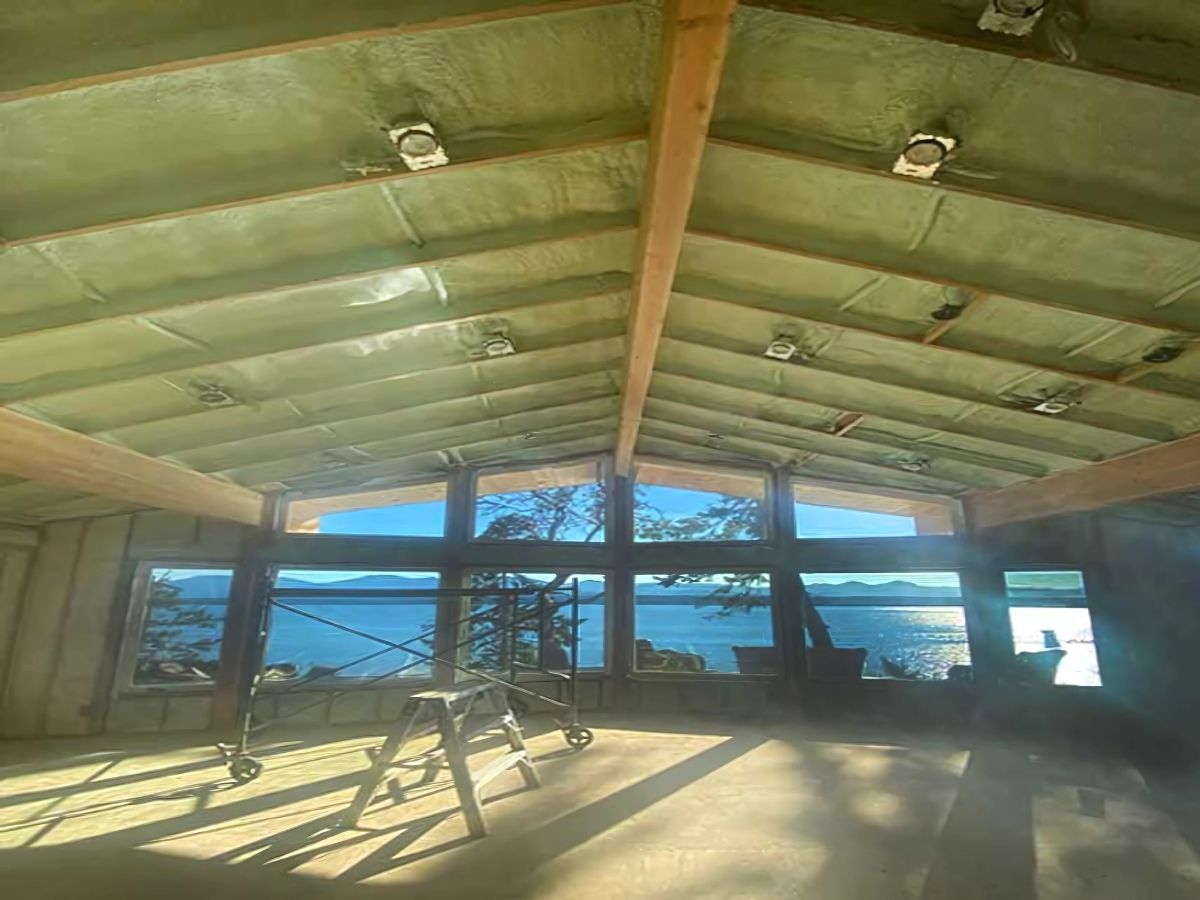
Summary: Closed cell spray foam offers higher R-value, moisture resistance, and structural strength, making it ideal for basements, crawl spaces, and exterior walls, while open cell foam is more affordable and better for soundproofing interior walls and attics. Choose based on your climate, moisture concerns, and budget, or consult a professional insulation contractor for guidance.
Choosing the right insulation for your home isn’t just about energy savings; it’s about comfort, durability, air quality, and long-term value. One of the most debated topics in home insulation is closed cell vs open cell spray foam insulation. Both are powerful insulation materials, but they serve very different purposes. So, how do you know which one to choose?
As a trusted insulation contractor with years of experience serving homeowners across British Columbia and Alberta, we’ve installed both types in everything from small attics to commercial warehouses. We’ve seen what works, what doesn’t, and what offers the best return on investment.
Whether you’re renovating, building new, or upgrading your home’s efficiency, this guide will walk you through the difference between open cell spray foam and closed cell spray foam, their benefits, ideal use cases, and how to make the right decision based on your needs.
What Is the Difference Between Closed Cell Spray Foam and Open Cell Spray Foam insulation?
When it comes to spray foam insulation, both closed and open cell versions are made from similar base materials, but the final product behaves very differently due to the cell structure.
How does the structure of open cell spray foam compare to closed cell spray foam?
Open cell spray foam is soft, spongy, and expands significantly, up to 100 times its liquid volume. It has an open-cell structure, meaning the tiny foam bubbles (or cells) are not fully encapsulated, allowing air and moisture permeability.
Closed cell spray foam, on the other hand, is dense, rigid, and much more compact. The foam bubbles are completely sealed, creating a vapor barrier and high resistance to air and moisture.
Here’s a quick comparison:
| Feature | Open Cell | Closed Cell |
|---|---|---|
| Density | ~0.5 lb/ft³ | ~2.0 lb/ft³ |
| Expansion Rate | High | Moderate |
| Vapor Barrier | No | Yes |
| Air Seal | Yes | Yes |
| R-Value per Inch | ~3.5-4 | ~6.5-7 |
| Cost | Lower | Higher |
Which spray foam type is more suitable for different parts of the home?
- Open cell spray foam is ideal for interior applications: wall cavities, attics, and ceilings where moisture isn’t a primary concern.
- Closed cell spray foam excels in basements, crawl spaces, exterior walls, and areas prone to moisture or extreme temperatures.
What Are the Benefits of Using Open Cell Spray Foam in Your Home?
Open cell spray foam is often the more budget-friendly option, but that doesn’t mean it’s “less than.” It serves specific purposes exceptionally well.
Is open cell spray foam good for soundproofing and moisture control?
Absolutely. Because of its soft, sponge-like texture, open cell spray foam absorbs sound more effectively than its closed-cell counterpart. That makes it perfect for:
- Home offices
- Media rooms
- Bedrooms or nursery walls
However, it’s not a vapor barrier, so it won’t block moisture. You’ll need to pair it with a proper vapor retarder in humid environments.
Where should you use open cell spray foam for best results?
- Interior walls: great for sound control between rooms.
- Attics and ceilings: the high expansion rate helps fill nooks and gaps.
- Retrofit projects: its flexibility makes it ideal for irregular framing.
What Makes Closed Cell Spray Foam Ideal for High-Performance Insulation?
If you’re aiming for top-tier energy efficiency and moisture resistance, closed cell spray foam insulation is the gold standard.
How does closed cell spray foam resist moisture and add structural strength?
Closed cell foam acts as a moisture barrier, making it excellent for:
- Basements
- Crawl spaces
- Foundations
- Exterior walls
Its density not only resists water intrusion but also adds structural integrity to walls and roofing. In fact, some building codes now recognize it as a structural enhancement in hurricane- or storm-prone areas.
What is the closed cell spray foam insulation R-value, and why does it matter?
The closed cell spray foam insulation R-value is about 6.5 to 7 per inch, nearly double that of open cell foam. R-value is a measure of thermal resistance, and higher numbers mean better insulation performance.
This makes closed cell spray foam a great choice where space is limited, like in narrow wall cavities, and when maximum energy savings are the goal.
Closed Cell Spray Foam vs Open Cell Spray Foam: Which Offers Better Energy Efficiency?
Which type reduces heating and cooling bills more effectively?
Closed cell spray foam outperforms open cell when it comes to pure thermal resistance due to its higher R-value. It reduces air infiltration and heat transfer more aggressively, particularly in extreme climates.
Open cell spray foam still performs well, especially when used in the right location, but you may need more of it to reach similar thermal performance.
How does insulation R-value impact your long-term energy savings?
It’s simple: the higher the R-value, the more you save in energy costs. Over time, closed cell foam’s upfront cost can be offset by lower utility bills, especially in harsh winters or hot summers. You might see a 30-50% reduction in heating and cooling costs with proper application.
How Do Costs Compare Between Closed Cell and Open Cell Spray Foam?
Is closed cell spray foam worth the higher upfront cost?
Yes, in many cases, especially if you live in areas with moisture, temperature extremes, or plan to stay in your home long-term. Expect to pay $1.00 to $1.50 per board foot for open cell foam, compared to $1.75 to $3.00 per board foot for closed cell.
But remember, you often need less closed cell foam to reach the desired R-value, and it serves multiple roles (insulation + vapor barrier + air seal).
When does open cell spray foam make more financial sense?
If you’re insulating a large attic or interior walls where vapor resistance isn’t needed, open cell foam offers excellent performance at a more affordable cost. It’s a solid choice for homeowners working within a budget who still want high energy efficiency and sound control.
Which Spray Foam Type Works Best in Your Climate and Home Design?
Geography matters, a lot. The climate and structure of your home should influence your insulation choice.
Should you choose closed cell spray foam in hot, humid areas?
Yes. Closed cell foam is the best choice for high humidity or flood-prone regions, like parts of coastal BC. Its low permeability and vapor barrier capabilities make it ideal for:
- Crawl spaces
- Foundations
- Rim joists
- Unvented roofs
It helps prevent mold, mildew, and wood rot.
Is open cell spray foam better for interior walls or attics?
Definitely. Open cell’s expansion rate and sound dampening make it a great fit for:
- Interior walls
- Ceilings
- Cathedral-style attic ceilings
Just be cautious in cold climates open-cell foam can allow vapor to pass through and should be paired with a vapor barrier when necessary.
Need Help Choosing Between Closed Cell and Open Cell Spray Foam? Contact Advance Insulation Canada
At Advance Insulation Canada, we specialize in helping homeowners and businesses make informed decisions about their insulation needs. Whether you’re comparing closed cell spray foam vs open cell spray foam, or you’re looking to improve your home’s energy efficiency, our expert team is ready to guide you.
We provide customized insulation solutions backed by experience and a commitment to quality. No upselling, just honest advice based on what works best for your space, your climate, and your budget.
Why Choose Advance Insulation Canada?
- Fully licensed and insured insulation professionals
- Serving both residential and commercial clients across BC and Alberta
- Free consultations and accurate on-site assessments
- Trusted guidance backed by real-world performance, not sales pressure
- Specializing in high-quality closed cell and open cell spray foam insulation
Call us now at 1-855-531-FOAM to speak directly with a spray foam expert to request a free, no-obligation quote today.
Closed vs Open Cell Spray Foam: How We Decide On Site
Every quote starts with a walk through the building. We look at cavity depth, whether the assembly touches soil or concrete, how vapour control is handled, and what the space is used for. On Vancouver Island, damp crawl spaces and rim joists usually point to 2lb closed cell foam because it holds its shape against moisture. Interior partition walls and deep vaulted ceilings often suit the lighter product instead.
In practical terms, the foam insulation closed cell vs open cell choice is about density, available depth and exposure to water rather than one product being better than the other. We spray both, so the recommendation follows the assembly, and a single home in Victoria, Langford or Courtenay may get a mix of the two. Quotes are free.
What Is Open Cell Spray Foam Made Of?
It is a low density polyurethane that expands fast on contact and cures into a soft, spongy solid. The cells stay partly open, so the foam remains flexible and weighs far less than closed cell product. That structure lets it fill oddly shaped bays, wrap around wiring and plumbing, and reach up into rafter cavities where rigid board would leave gaps.
Because it is vapour permeable, open cell foam insulation is normally paired with a separate vapour retarder in our climate. It is a common pick for interior walls, sound separation between rooms and attic slopes in homes around Victoria, Duncan and Nanaimo. Trimming the overspray flush with the studs is part of the install, so drywall sits flat afterwards. We also spray open cell insulation in new construction where cavity depth is generous.
Open Cell Spray Foam vs Closed Cell: Sound Control in Walls
Clients building home offices, media rooms and shared walls often ask us to compare the noise reduction capabilities of open-cell versus closed-cell spray foam insulation for walls. The softer, lower density foam absorbs airborne sound inside a stud bay better than the rigid 2lb product, which is denser and passes more vibration through framing. For interior partitions where moisture is not a factor, the light foam is usually the acoustical choice, and we spray acoustical and thermal foam in commercial buildings as well.
Foam alone will not stop structure borne noise. Resilient channel, staggered studs, sealed electrical boxes and solid core doors do the rest of the work. If the framing rather than the insulation is the limiting factor, we will say so before spraying.
Is spray foam open or closed cell?
Both exist, so the label matters when you compare quotes. The open cell product is light and soft and is used mainly inside conditioned space. The closed cell product is rigid 2lb foam used on crawl space walls, rim joists, sea cans and Quonset buildings. Homeowners asking for the best open cell spray foam generally want the interior grade material, and we confirm which one the assembly calls for before any spraying starts.
Open cell or closed cell spray foam for a crawl space on Vancouver Island?
Crawl spaces here deal with ground moisture and cool damp air, so closed cell or open cell spray foam is not an even match. The 2lb closed cell product goes on crawl space walls and rim joists because it resists water and adds rigidity to the assembly. The lighter foam stays inside the heated envelope. Upgrades like this can qualify for BC and Alberta energy rebates, and we help customers apply.
Interior Applications: Matching Foam Type to the Assembly
Renovation clients regularly ask what is the difference between open-cell and closed-cell spray foam for interior applications, and the answer comes down to how much depth you have and what the wall or ceiling must resist. Inside a heated home, partition walls, bedroom walls and deep rafter bays are typically the light foam: it fills the cavity completely, stays flexible as framing moves and uses less material per bay. The rigid 2lb foam earns its place where the cavity is shallow, where air and vapour control need to be built into the insulation, or where the assembly sits against concrete, such as basement walls and headers.
We mask surfaces, protect finishes and ventilate during the spray, then trim and clean up before drywall. The same rules apply in Edmonton, Calgary, Fort McMurray and Kelowna, with deeper frost pushing more closed cell down at the foundation.