
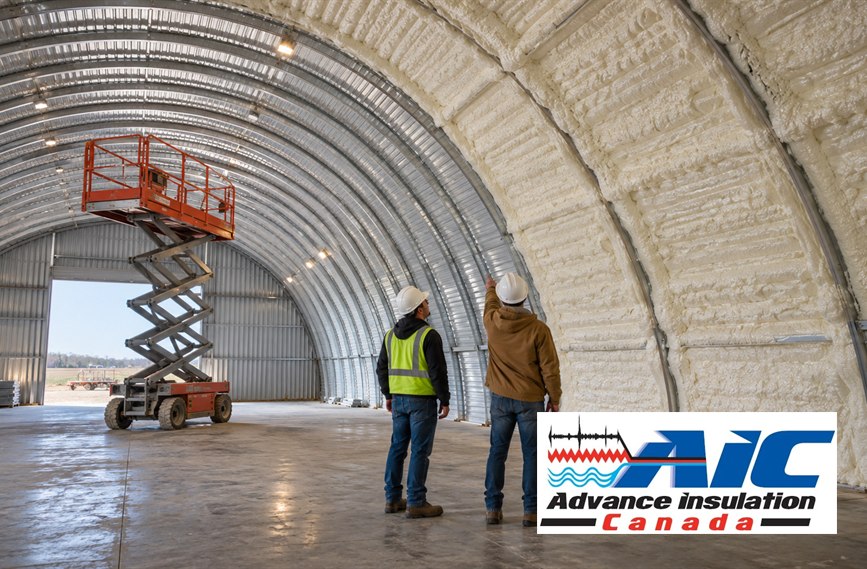
Summary: Quonset insulation becomes a fall priority when cold metal, indoor humidity, and stored equipment create condensation risk. Planning the work before steady winter weather helps owners address thermal control, air sealing, access, and coating requirements in the right order.
A fall plan for quonset insulation helps owners protect metal buildings before cold surfaces and damp indoor air start creating condensation inside the shell.
Metal Buildings Change Temperature Quickly
A Quonset building can swing from warm afternoon air to cold overnight metal faster than a conventional framed space. That temperature swing is exactly why fall condensation planning matters for storage, workshops, farms, and light industrial use.
The problem is not only comfort. Condensation can drip on tools, inventory, vehicles, or stored materials, and it can make the building feel damp even when there is no roof leak.
Owners often notice the issue first on stored metal, cardboard, or tools. Those clues are worth mentioning because they show where condensation has already affected the building’s contents.
Start With How The Building Is Used
The right quonset insulation approach depends on whether the building is used for occasional storage, daily work, equipment repair, animal care, or commercial operations. Each use changes the moisture load and heating expectations.
A building used once a week may need a different assembly than a heated shop with people inside all day. October is a useful time to answer those questions because owners still remember summer storage issues and can anticipate winter use.
The use pattern also affects whether the owner wants full-time comfort or basic protection. A farm storage building, a hobby shop, and a commercial bay should not receive the same one-sentence recommendation.
Condensation Planning Reference
| Building Use | Condensation Trigger | Insulation Concern | Planning Note |
|---|---|---|---|
| Equipment storage | Cold metal roof | Drips on machinery | Protect roofline and seams |
| Workshop | People and heat | Moist indoor air | Plan ventilation and air sealing |
| Agricultural use | Variable humidity | Surface moisture | Match assembly to use |
| Commercial bay | Open doors | Fast heat loss | Stage work around operations |
The table shows why a generic metal-building answer is risky. The same curved shell can have very different needs depending on what the owner stores, heats, washes, repairs, or protects inside.
This planning lens is also useful for sequencing. If electrical, lighting, shelving, or overhead-door work is planned, those details may need to happen before insulation limits access to the shell.
Spray Foam Can Help With Curved Surfaces
Curved metal and ribbed surfaces make continuity important. Spray foam can conform to irregular profiles, reduce air movement at the metal surface, and help limit the temperature differences that contribute to condensation.
That is why readers often compare this topic with broader spray foam insulation options. The product is only part of the plan, though; preparation, thickness, access, and required coverings still matter.
Foam can solve several problems at once, but only when it is installed against a suitable surface. That is why surface condition and preparation should be part of the quote instead of an afterthought.
Access And Preparation Affect The Quote
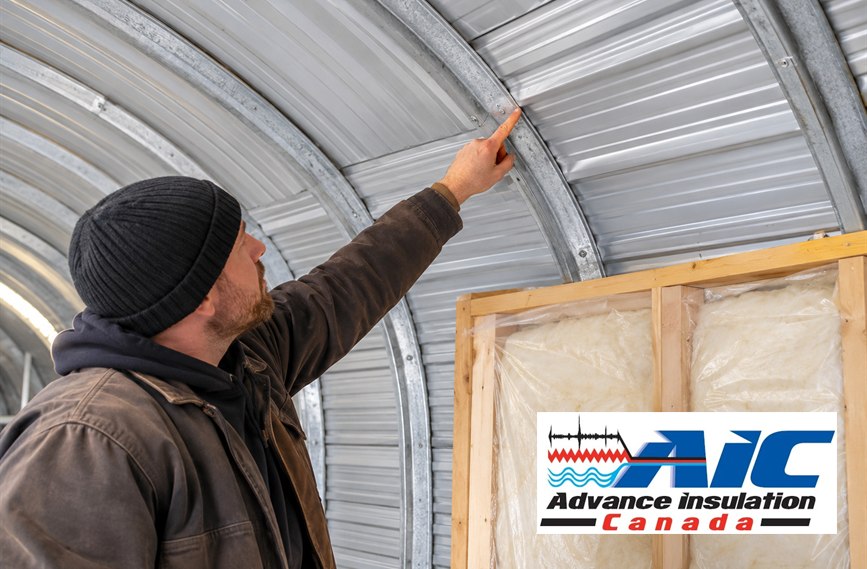
Quonset projects often involve lifts, stored equipment, lighting, electrical runs, dust, and limited staging space. A useful quote should account for how crews reach the roofline and how the owner will clear the work area.
Surface condition also matters. The substrate should be evaluated before installation so adhesion, moisture, and cleanliness are understood instead of discovered after the crew has already mobilized.
Access planning can prevent expensive surprises. Moving equipment, arranging lifts, and protecting stored contents may be just as important as choosing the insulation material.
Fire And Use Requirements Cannot Be An Afterthought
Some insulated metal buildings need protective coatings, coverings, or fire-related details based on product, occupancy, and exposure. Owners should ask how the insulation system will be left, not only how it will be sprayed.
The verified quonset insulation listing on Google Maps can help confirm the business while the owner compares contractors. The technical conversation should still happen on the building, with the actual use and code expectations in view.
Fire and finish details should be discussed early because they can affect cost and schedule. A building that will be occupied daily may need a different conversation than a cold storage structure.
What Owners Should Document Before A Visit
Before booking, note the building dimensions, door sizes, use pattern, heat source, visible condensation areas, and whether equipment can be moved. Photos of roof curves, seams, end walls, and stored contents help the contractor plan access.
It also helps to explain whether the goal is comfort, moisture control, energy savings, storage protection, or year-round work. The clearest goal usually leads to a better insulation plan and fewer surprises.
The most helpful photos show the whole building and the problem areas. End walls, doors, roof curves, and existing penetrations all help the contractor understand the project before the site visit.
Condensation planning is also about protecting what the building does for the owner. A Quonset used for seasonal vehicles may need to protect finishes and metal surfaces, while a working shop may need warmer surfaces, better comfort, and fewer drips during daily operation. Those are different outcomes, and the insulation recommendation should reflect the difference.
Owners should also ask whether the project needs to coordinate with lighting, electrical, door seals, or interior wall framing. Once the curved shell is insulated, future changes may become more awkward. Discussing those details in October can prevent cutting into fresh work later because a shelf, conduit, or heater location was not planned.
The strongest Quonset quote explains preparation as clearly as installation. It should identify what needs to be moved, how the roofline will be reached, what surface condition is expected, and whether the finished foam requires protection. That level of detail is what turns a condensation complaint into a building plan.
A Quonset project can also benefit from a short written scope because the building may serve several purposes over the year. If it stores equipment in winter, becomes a workshop in spring, and sits open during summer projects, the insulation plan should acknowledge those changing demands. Owners do not need a complicated engineering report for every building, but they do need a clear statement of what the insulation is expected to improve and which issues are outside the scope.
Owners comparing metal-building approaches can use the Quonset installation guide and the spray foam versus traditional Quonset comparison as supporting reading.
The Advance Insulation Canada Invitation
When cold metal and indoor moisture are about to meet, Advance Insulation Canada can plan quonset insulation around the building’s actual winter use. Call 1-855-531-3626 for a free quote before condensation season decides the priorities for you.