Summary: Commercial insulation reduces heat transfer through roofs, walls, and other parts of the building envelope during cooling season. Air sealing and complete coverage are equally important because uncontrolled leakage can carry heat and humidity around the insulation. An envelope assessment helps owners prioritize upgrades that suit the building’s use, construction, mechanical systems, moisture conditions, and operating schedule.
Professional commercial spray foam can provide thermal resistance and air control in suitable metal, wood, and concrete assemblies. The objective is not simply to add material, but to create a more continuous boundary around conditioned space while respecting fire, occupancy, ventilation, and code requirements.
Where Commercial Buildings Gain Summer Heat
Large roof areas receive intense solar exposure and can become a major source of heat flow into warehouses, shops, offices, and industrial spaces. Metal panels and structural members can conduct heat rapidly when insulation is missing, compressed, wet, or discontinuous. Loading doors, service penetrations, roof-to-wall joints, and additions create further weak points.
Internal loads also matter. Lighting, motors, process equipment, refrigeration, computers, and occupants add heat that the cooling system must remove. Envelope improvements cannot eliminate these loads, but they can reduce avoidable heat entering from outside.
Why Air Leakage Increases Cooling Demand
Air can leak through panel joints, roof transitions, utility entries, door frames, unsealed partitions, and gaps around mechanical systems. Wind and building pressure then move hot outdoor air inward and conditioned air outward. In humid weather, the HVAC system must remove moisture as well as lower the air temperature.
High-bay buildings can experience strong stack effects because indoor and outdoor air densities differ across the building height. Exhaust systems and large doors may further change pressure. Air-sealing priorities should therefore be based on how the facility actually operates, including production shifts and door cycles.
Spray Foam as Part of a Continuous Envelope
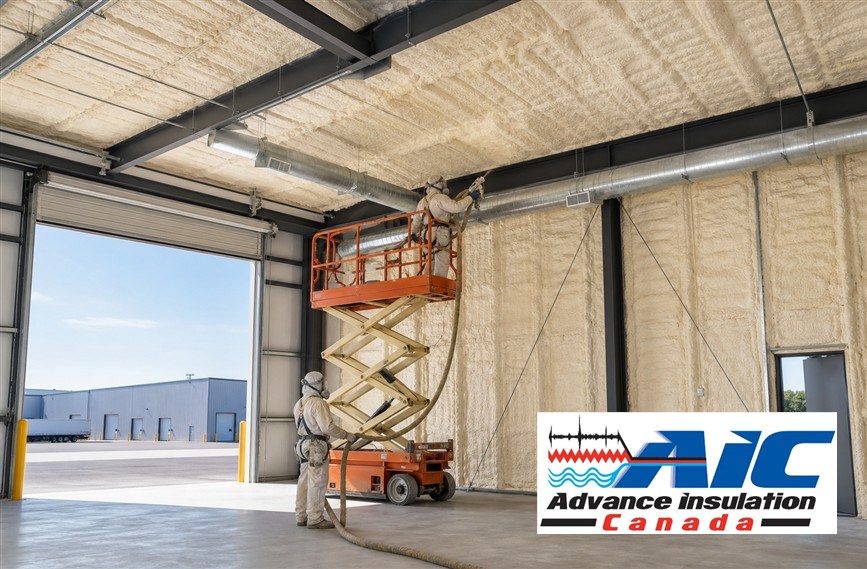
Closed-cell spray foam can adhere to many compatible substrates and help control both heat flow and air movement. It can be useful around irregular shapes, curved structures, metal buildings, rooflines, rim areas, and difficult transitions. Product selection, thickness, substrate preparation, temperature, ventilation, and installer training directly affect performance.
Spray foam is not automatically suitable for every surface. Wet materials, contaminated substrates, concealed corrosion, incompatible coatings, and assemblies that need a different drying path require investigation. Thermal or ignition barriers may be required according to the product, use, occupancy, and applicable code.
Occupied facilities require a detailed work plan. Spray areas may need isolation, negative air, ventilation, signage, and restricted access during application and curing. Products, re-occupancy guidance, safety data, and protection for equipment or inventory should be reviewed before mobilization.
Quality-control checks may include substrate moisture and temperature readings, test patches, thickness measurements, adhesion observations, and visual inspection for voids or overspray. Documentation is particularly valuable when work will later be hidden behind finishes or protective coatings.
Insulation Quality Affects Equipment and Occupants
A more stable envelope can reduce temperature swings near exterior walls and roofs. That can improve comfort in offices, retail areas, workshops, and occupied production zones. It may also help protect temperature-sensitive inventory or processes, although critical environments require engineering and dedicated controls.
Reducing peak envelope load can support HVAC performance, but owners should not resize or replace equipment based on assumptions. Energy modelling, mechanical calculations, controls data, and measured operation may be needed before capital decisions are made.
Comfort complaints should be mapped by location and time rather than summarized as one building-wide problem. A hot mezzanine may reflect stratification, while a perimeter office may be affected by glazing and a loading area may be dominated by door traffic. Good diagnosis prevents envelope funds from being spent on a problem controlled mainly by operations or air distribution.
Where ducts pass through hot unconditioned zones, duct sealing and insulation may also deserve attention. Supply-air losses can waste cooling before it reaches occupied areas, while return leaks can draw hot air into the system. Mechanical and envelope contractors should coordinate responsibilities at these intersections.
Common Signs of Envelope Underperformance
Long cooling runtimes, hot perimeter zones, overheated mezzanines, condensation, drafts near panel joints, and large temperature differences between areas can indicate problems. Water stains, damaged liners, loose insulation, and visible daylight at joints are more direct evidence. Utility trends can help, but they should be normalized for weather, production, occupancy, and rate changes.
The article comparing spray foam and fiberglass for commercial buildings explains how product characteristics differ. A site review should verify what is already installed rather than relying only on drawings or invoices.
How to Prioritize a Commercial Upgrade
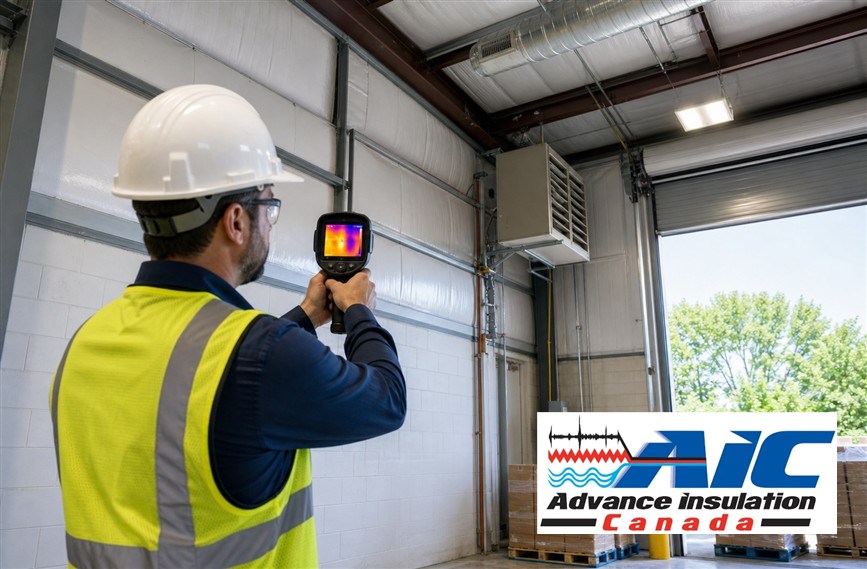
Begin with safety, active water entry, roof condition, and damaged materials. Next, identify the largest connected air leaks and the envelope areas with the greatest exposure or missing coverage. Infrared surveys, smoke tools, pressure testing, moisture meters, and visual inspection can provide useful evidence when used under suitable conditions.
Phased work may make sense for an operating facility. Owners can coordinate insulation with roofing, cladding, equipment replacement, tenant improvements, or scheduled shutdowns. A defined scope should include access, surface preparation, protection of operations, ventilation, curing, cleanup, and verification.
Facilities with multiple tenants or process zones may need separate priorities. A refrigerated area, conditioned office, loading bay, and high-heat production space should not receive identical recommendations. Utility submetering, controls data, or temporary sensors can help reveal where envelope work has the strongest operational value.
Procurement documents should identify the intended thermal and air-control functions, not only product thickness. They should also address substrate responsibility, masking, fire protection, lifts or scaffolding, shutdown windows, waste handling, warranties, and closeout records.
Measure Results Instead of Guessing
Document indoor temperatures, humidity, HVAC runtime, energy use, production schedules, and comfort complaints before work starts. After completion, compare equivalent weather and operating periods. Controls trends and interval utility data may reveal whether peak demand or runtime changed.
Post-work inspection should confirm continuity at transitions and verify that doors, dampers, exhaust systems, and safety devices still operate properly. Any new condensation or pressure-related issue needs prompt investigation. An insulation upgrade is complete only when the building performs safely under real operating conditions.
Long-term maintenance matters as well. Roof leaks, impact damage, new penetrations, and later trade work can interrupt an otherwise effective boundary. Adding envelope checks to routine facility inspections helps preserve the investment and makes future problems easier to trace.
Advance Insulation Canada serves residential, commercial, and industrial insulation needs in its service regions. The verified commercial building insulation profile on Google Maps provides the Victoria operation’s business information.
The Advance Insulation Canada Invitation
Advance Insulation Canada can assess commercial building insulation priorities and can be reached at 1-855-531-3626 to discuss your facility. Request a free quote for an insulation plan designed to reduce avoidable summer cooling demand.