
Summary: Winter can damage attic insulation through moisture, ice dams, air leaks, pests, roof leaks, and compression. Common warning signs include higher heating bills, cold rooms, damp insulation, ceiling stains, musty smells, large icicles, animal evidence, and insulation that looks uneven or flattened. A proper inspection should look at insulation condition, air sealing, attic ventilation, roof leaks, bath fan venting, and any safety concerns before new insulation is added.
Higher Heating Bills Can Point to Insulation Trouble
A higher winter heating bill is one of the first signs insulation may not be doing its job. Cold weather puts pressure on the whole home, and damaged attic insulation can allow heat to escape faster than it should. Rooms may feel colder, the furnace may run longer, and the home may struggle to hold a steady temperature.
Attic insulation does more than sit in place. It needs enough depth, proper coverage, dry material, and good air sealing underneath it. ENERGY STAR explains that attic air sealing can stop major air leaks and help maintain the desired temperature throughout the home. Paired with insulation, air sealing can also help reduce winter ice dam formation.
A high bill does not automatically prove insulation damage, but it is a useful clue. If the cost increased after a hard winter, or if certain rooms became harder to heat, the attic deserves a closer look. An inspection can reveal low insulation levels, shifted material, hidden air leaks, or insulation damaged by moisture or pests.
Cold Rooms and Drafts May Mean Heat Is Escaping
Cold bedrooms, chilly hallways, and drafty upper floors can signal winter insulation problems. Heat naturally rises, so the attic is often one of the biggest areas where comfort problems occur. If warm air leaks through ceiling gaps and bypasses the insulation, the home can feel cold even when the furnace is working.
Natural Resources Canada explains that air sealing and insulation should work together. Their attic guidance points to common leakage areas, including attic hatches, plumbing penetrations, exhaust fans, chimney gaps, wiring holes, and ceiling openings. Warm, moist indoor air can move through those areas and reach the attic if gaps are not sealed properly.
Drafts can also make homeowners turn up the thermostat, which increases energy use without solving the real problem. The issue may not be the furnace. The problem may be an attic system that allows conditioned air to escape and cold air patterns to develop below.
A winter-damaged attic often has multiple issues. Insulation may be thin in some spots, compressed in others, and interrupted around penetrations. Air sealing gaps first usually matters more than simply blowing new insulation over the existing material.
Damp or Wet Insulation Is a Serious Warning Sign
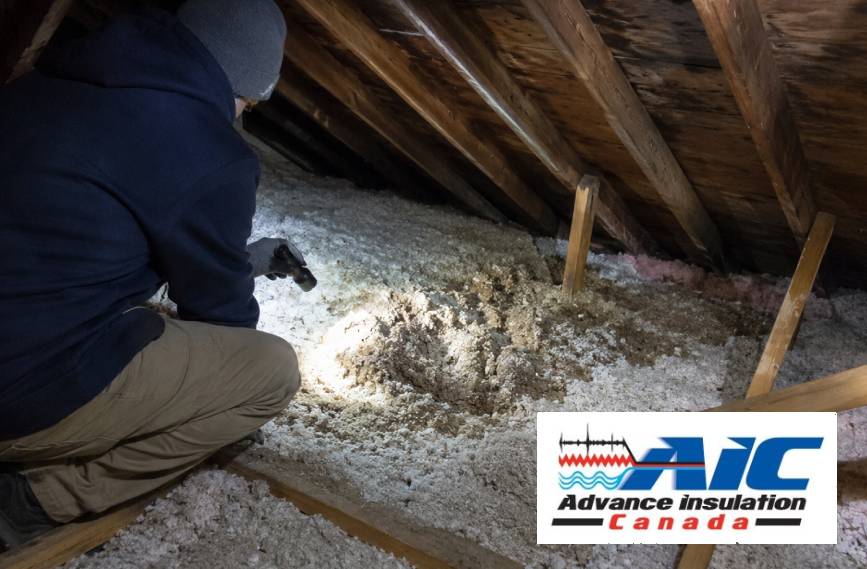
Damp insulation is one of the clearest signs of winter-caused damage. Moisture can enter an attic through roof leaks, condensation, ice-dam leaks, poor ventilation, or bathroom fans venting into the attic rather than outdoors. Once insulation becomes wet, it may lose performance and create conditions for odors or mould concerns.
The EPA explains that controlling moisture is the key to controlling mould growth in homes. Mould spores are naturally present indoors and outdoors, so the practical solution is to fix water and moisture problems quickly.
Wet insulation can also hide problems. The surface may look dry while deeper material remains damp. Ceiling stains, dark roof sheathing, rusty nails, water trails, clumped loose-fill insulation, and musty odors are all reasons to investigate further.
CMHC’s attic moisture and ice dam guidance notes that wet attic signs may include moisture accumulation, roof sheathing problems, and spring leaks caused by winter ice melting after a warm spell. Good air sealing and insulation help keep the attic cool and dry, more like an outdoor space than a warmed indoor space.
Ice Dams and Large Icicles Can Reveal Attic Heat Loss
Ice dams and large icicles are often exterior signs of problems with attic insulation. They can form when heat escapes from the living space into the attic, warms the roof deck, melts snow, and allows water to refreeze near the colder roof edges. Over time, trapped water can back up under shingles and leak into the home.
ENERGY STAR notes that attic air sealing, combined with insulation, can help reduce the formation of dangerous winter ice dams. Their guidance also explains that the attic is often one of the biggest opportunities for improving home comfort and energy performance.
Ice dams can point to several connected problems. Insulation may be too low near the eaves. Warm air may be leaking around ceiling penetrations. Soffit vents may be blocked by insulation. Bathroom exhaust fans may be sending warm, humid air into the attic. Ventilation may be poor.
A few small icicles after unusual weather may not mean the whole attic is failing. Repeated ice buildup, large icicles, ceiling leaks near exterior walls, or roof-edge staining are stronger warning signs. Understanding how attic insulation improves energy efficiency can help homeowners recognize when heat loss is behind these patterns and what to do before the next cold season.
Musty Smells Can Mean Moisture Reached the Insulation
A musty smell in the upper floor, attic hatch area, closets, or ceiling space can suggest that moisture has affected the attic. Winter moisture can build slowly, especially when warm indoor air leaks upward and condenses on cold roof sheathing. Over time, damp materials can create odors that move into the living space.
Musty smells should not be covered up with air fresheners. The source needs to be found. In an attic, odors may come from wet insulation, mould growth on roof sheathing, animal contamination, roof leaks, or poor ventilation.
Natural Resources Canada explains that, after air sealing, attic ventilation serves as a second line of defense against water vapor that may have entered the attic. Proper ventilation helps keep the attic cooler and better managed, reducing conditions that lead to moisture and ice dams.
A good inspection should check more than the insulation surface. The roof deck, rafters, vents, baffles, bathroom fan ducts, exhaust terminations, and attic hatch should all be reviewed. Adding new insulation without addressing moisture problems can make the attic look better for a short time, while the underlying issue persists.
Flattened, Shifted, or Missing Insulation Reduces Performance
Insulation needs loft and coverage to perform well. Winter can reveal areas where insulation has shifted, settled, flattened, or been disturbed. Loose-fill insulation may be moved by wind washing near soffits. Batt insulation may pull away from framing or leave gaps. Stored items, workers, animals, or past repairs can compress sections, reducing effectiveness.
A damaged attic may look uneven. Some sections may have deep coverage while others show joists, bare drywall, or low spots. Around the attic hatch, homeowners may notice insulation pushed aside or compressed from repeated access. Near roof edges, missing baffles, or blocked soffits can allow insulation to move into areas where it should not be.
ENERGY STAR’s attic insulation guidance says a well-sealed and properly insulated attic is one of the most important home upgrades for reducing air leaks that waste energy and make a home less comfortable. Their guidance also encourages homeowners to measure insulation levels and work with qualified contractors when needed.
Flattened or missing insulation is not always a moisture issue. Sometimes the material is simply old, settled, or disturbed. An inspection can identify where top-up insulation makes sense and where prep work is needed first.
Pest Activity Can Damage and Contaminate Insulation
Winter often pushes animals toward warm, protected spaces. Attics can attract mice, squirrels, raccoons, birds, bats, and insects. Once inside, pests can tunnel through insulation, compress it, move it away from important areas, and leave contamination behind.
Signs of pest activity include droppings, nesting material, scratching noises, chewed wiring, damaged vents, odd smells, disturbed insulation, and small entry points near soffits, rooflines, fascia, or vents. Pest-damaged insulation may no longer provide even coverage. Contaminated insulation can also raise cleanup and health concerns.
CMHC warns that significant bird or bat droppings should not be disturbed casually, as cleanup may pose health risks. The same CMHC attic guidance also notes that loose-fill vermiculite insulation may contain asbestos and should not be disturbed without proper care.
Pest problems should be corrected before new insulation is installed. Entry points need to be closed, damaged materials may need to be removed, and contaminated areas may require professional cleanup. Fresh insulation placed over animal-damaged material can trap odors, contamination, and hidden problems.
Ceiling Stains and Spring Leaks Need Attic Attention
Ceiling stains after winter are a strong sign that the attic should be checked. Water stains may come from roof leaks, ice dam leaks, condensation, plumbing issues, or bathroom fans venting into the attic. Brown marks, bubbling paint, peeling drywall tape, or damp ceiling areas should not be ignored.
Spring leaks are especially important because they may appear after snow and ice melt. CMHC notes that ceiling leaks occur only in spring when ice forms on the roof sheathing during winter and then melts during a warm spell.
A roof leak may damage the insulation directly below it. Condensation may affect a broader area of insulation and roof sheathing. Ice dams may create water intrusion near the eaves. Bath fan problems may concentrate moisture around ducts or roof vents.
A proper inspection should trace the stain back to the source. The fix may involve roofing, ventilation, air sealing, bath fan ducting, insulation removal, or insulation replacement. Guessing can lead to repeated repairs and continued damage. Reviewing attic insulation insights for BC homeowners can help set the right expectations for what a thorough inspection should cover.
The Advance Insulation Canada Invitation
If your home feels colder, smells musty, has ceiling stains, or shows signs of attic trouble after winter, Advance Insulation Canada can inspect your insulation and help you understand the right next step. Contact the team to ask about attic insulation, damaged insulation, air sealing, insulation removal, and insulation upgrades for your home. Call 1-855-531-3626 today to get started.