
Summary: Spray foam insulation outperforms fiberglass in commercial buildings due to higher R-value, superior air sealing, moisture resistance, and longer lifespan, despite a higher upfront cost. For most commercial projects prioritizing long-term energy savings and durability, spray foam is the better investment, while fiberglass may suit smaller budgets or temporary structures.
Insulating a commercial building is a serious decision. Whether you’re designing a new warehouse, retrofitting an office, or upgrading an industrial facility, the type of insulation you choose will impact your building’s performance for decades. And when it comes to spray foam insulation vs fiberglass, the debate is anything but simple.
In this guide, we’ll break down everything you need to know about spray foam vs fiberglass for commercial applications. We’ll explain the pros and cons, compare key performance metrics, and help you figure out what’s right for your building.
At Advance Insulation Canada, we’ve helped countless businesses in Victoria, B.C., and Fort McMurray, AB find the right insulation for their unique needs to save them thousands on their energy bills. Our experience, combined with proven data, will help you make an informed choice that saves you money, time, and energy long-term.
What Is Spray Foam Insulation?
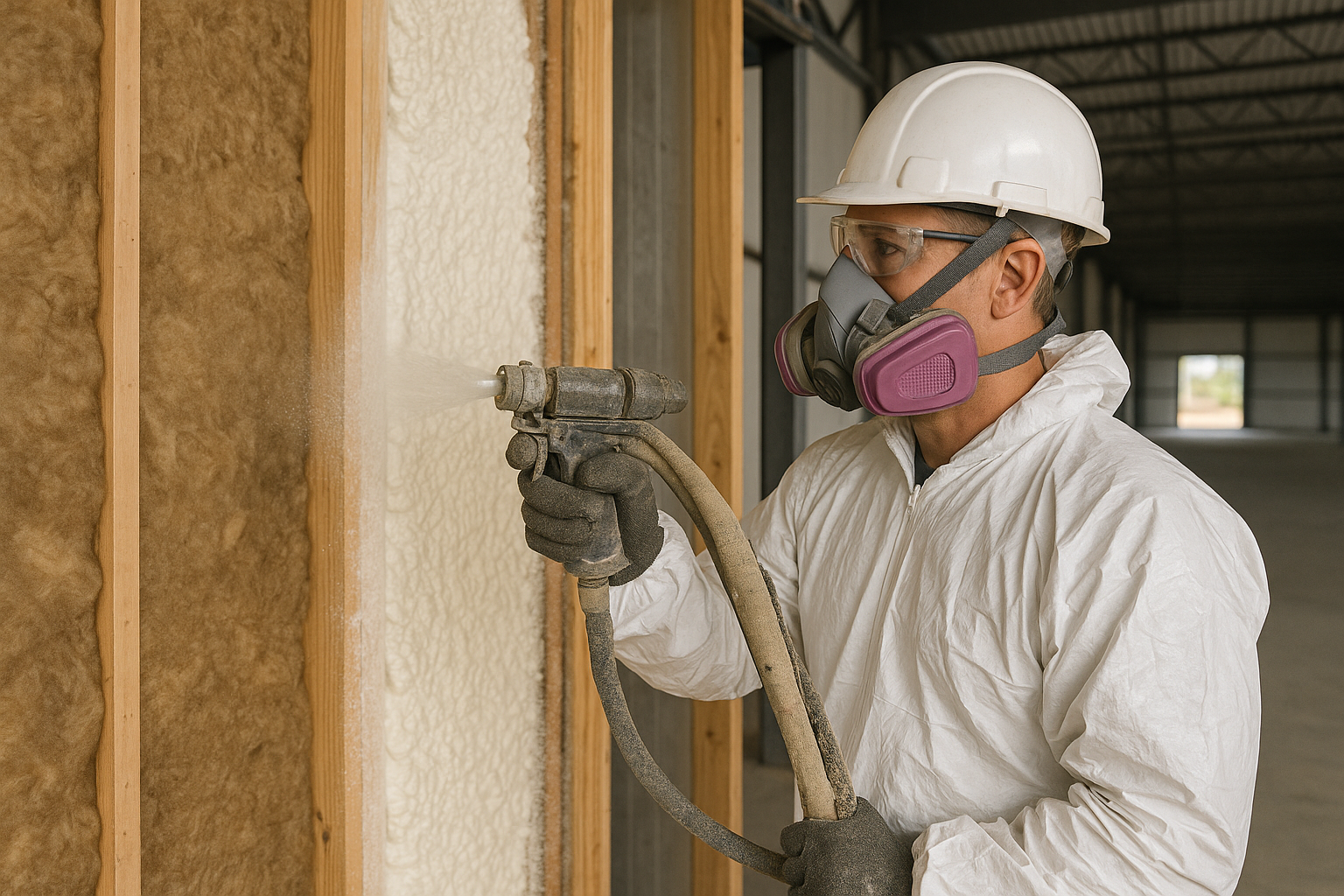
Spray foam insulation is a high-performance insulation material made by mixing two chemical components that expand when sprayed. It fills gaps, seals air leaks, and creates a continuous barrier across walls, ceilings, and floors.
There are two main types:
- Open-cell spray foam: lighter, more flexible, and slightly less expensive
- Closed-cell spray foam: denser, more rigid, and offers a higher R-value per inch
Spray foam is applied directly to the surface with special equipment, and once cured, it hardens into a solid layer. It’s known for its air sealing abilities, moisture resistance, and longevity.
In commercial buildings, spray foam insulation near me is one of the most in-demand services due to its performance and long-term value.
What Is Fiberglass Insulation?
Fiberglass insulation is made of extremely fine glass fibers and is one of the most widely used insulation materials, especially in residential construction. It typically comes in batts, rolls, or loose-fill form.
Fiberglass works by trapping air within the glass fibers, slowing the transfer of heat. While it’s cost-effective and readily available, it has limitations in terms of air sealing, moisture resistance, and installation versatility.
In large commercial projects, fiberglass can still play a role, but there are many cases where it falls short compared to more modern alternatives like spray foam.
Key Differences Between Spray Foam and Fiberglass Insulation
- R-Value and Energy Efficiency
The R-value measures an insulation material’s resistance to heat flow. The higher the R-value, the better the insulation.
- Spray foam insulation (closed-cell): R-6 to R-7 per inch
- Spray foam (open-cell): around R-3.5 to R-4 per inch
- Fiberglass batts: typically R-2.9 to R-3.8 per inch
Because of its superior R-value per inch and its ability to seal air gaps, spray foam outperforms fiberglass in thermal performance, especially in extreme climates or buildings with complicated layouts.
- Installation Process and Cost
Fiberglass is easier and faster to install in open, accessible areas. It’s rolled out or fitted between studs and joists. It doesn’t require specialized equipment, which keeps labor costs lower.
Spray foam, on the other hand, must be applied by trained professionals using pressurized equipment. It requires prep work and safety measures during application. This makes the upfront cost of spray foam insulation higher.
While fiberglass may cost less now, spray foam saves more over time through energy efficiency and reduced maintenance.
Air Sealing and Moisture Resistance
Fiberglass does not seal air leaks. Gaps around fixtures, wiring, or framing can let air and moisture pass through.
Spray foam acts as an air barrier and moisture barrier. This prevents:
- Drafts
- Condensation
- Mold growth
- Water infiltration
For commercial buildings where energy control and moisture resistance are crucial, spray foam clearly leads the way.
- Long-Term Performance and Durability
Over time, fiberglass can settle, sag, or compress, reducing its effectiveness. It’s also more vulnerable to moisture and pest damage.
Spray foam maintains its shape and insulation properties for decades. It doesn’t shift, doesn’t degrade easily, and adds structural rigidity to walls and roofs.
If you’re looking for insulation that lasts the life of the building with minimal maintenance, spray foam is a safe option for you.
Advantages of Spray Foam Insulation for Commercial Properties
Why Commercial Spray Foam Insulation Outperforms Fiberglass
Commercial buildings demand more than just average performance. You need consistency, air tightness, moisture control, and longevity.
Spray foam provides:
- Seamless coverage across irregular surfaces
- Superior thermal performance
- Strong adhesion to concrete, steel, and wood
- Higher energy savings in climate-controlled spaces
In warehouses, manufacturing plants, and offices, the performance of spray foam insulation translates to lower operating costs and improved comfort for staff and equipment.
- Spray Foam Advantages for Energy Savings and Building Longevity
Energy loss through walls and roofs is one of the biggest challenges in commercial construction. Spray foam tackles this head-on by minimizing:
- Heat transfer
- Air leakage
- Condensation
With better insulation, HVAC systems run more efficiently, leading to lower utility bills and extended equipment lifespan.
Spray foam also protects the building envelope, reducing wear and tear from fluctuating temperatures, moisture, and wind pressure. Over time, this preserves structural integrity and lowers repair costs.
- How Spray Foam Reduces HVAC Load in Large Buildings
In large commercial spaces, temperature control is costly. Spray foam significantly reduces the heating and cooling load on your HVAC systems by:
- Creating a tighter building envelope
- Eliminating hot and cold spots
- Reducing duct loss in conditioned attics or crawl spaces
That means smaller HVAC equipment may be needed, and systems will cycle less often, extending their life and cutting energy use.
Which Insulation Is Right for Your Commercial Building?
| Feature | Spray Foam | Fiberglass |
|---|---|---|
| R-Value (per inch) | High (up to R-7) | Moderate (R-2.9 to R-3.8) |
| Air Sealing | Excellent | Poor |
| Moisture Resistance | Excellent | Limited |
| Lifespan | 20+ years | 10 to 15 years |
| Upfront Cost | Higher | Lower |
| Long-Term Savings | High | Moderate |
| Installation | Requires pros | Can be DIY or pro |
At Advance Insulation Canada, we’ve worked with commercial clients across Victoria, BC, and Fort McMurray, AB, helping them make smart insulation choices that deliver results. If you’re searching for spray foam insulation near me, we’re your go-to local experts.
If your priority is performance, efficiency, and durability, spray foam is clearly the better choice. For small budgets or temporary buildings, fiberglass can work, but it won’t give you the same long-term benefits.
Need Commercial Spray Foam Insulation Near Me? We’re Ready to Help
If you’re planning a commercial project and wondering which insulation is the right fit, we’re here to help.
At Advance Insulation Canada, we’ve helped businesses across Victoria, B.C., and Fort McMurray, AB, install high-quality commercial spray foam insulation that stands the test of time. We understand the challenges of commercial construction and offer solutions that fit your building, budget, and goals. Call us now at 1-855-531-FOAM to speak directly with an insulation expert. You can request a free, no-obligation quote and get clear answers to your questions.
Is spray foam insulation better than fiberglass in a commercial building?
For most commercial shells, yes. Two pound closed cell foam bonds directly to steel deck, block and concrete, seals around pipe and conduit penetrations, and holds its shape in tall walls where batts sag over time. Fiberglass still has a place in framed interior walls and partitions when a separate air barrier is properly detailed. The right choice depends on the assembly, the substrate and how the space is heated.
Is spray insulation better than fiberglass in shops, Quonsets and sea cans?
In those buildings it usually is. Corrugated steel, curved Quonset ribs and shipping container walls leave no flat cavity for batts, so fiberglass ends up loose, compressed or held off the surface. Closed cell foam is sprayed straight onto the metal, follows every rib, and keeps warm indoor air off cold steel, which is the main cause of dripping condensation in Fort McMurray and Edmonton through winter.
Commercial Foam Insulation: What Happens on Site
A commercial foam insulation job starts with a site walk to confirm substrate, access and the thickness the assembly calls for. Before spraying, we mask off finished surfaces, mechanical equipment and adjacent work areas, set up ventilation, and agree on when the space can be reoccupied. Foam is applied in passes rather than one thick lift so it cures properly and stays adhered.
Where foam is left exposed in occupied or storage areas, a thermal barrier or intumescent coating is often required, and we can apply protective and polyurea coatings on the same visit. We plan around other trades so mechanical, electrical and drywall crews are not held up, and we work this way across Victoria, Nanaimo, Courtenay, Kelowna, Calgary and Fort McMurray. We are COR certified in Alberta and British Columbia.
What is better spray foam insulation or fiberglass when the budget is tight?
A hybrid often makes the most sense: a closed cell flash coat for air sealing and moisture control, then batts or blown-in fill to build up depth for less cost. In attics and crawl spaces, removing damaged material and topping up can also stretch the budget. We can walk you through BC and Alberta energy rebate programs your upgrade may qualify for, and quotes are free.